Swedish tackle firms urged to take responsibility
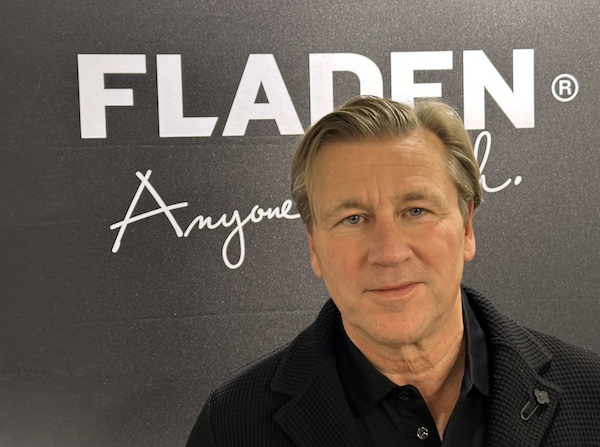
Extended Producer Responsibility (EPR) is a policy strategy designed to hold manufacturers responsible for the end-of-life consequences of their goods. But what does that mean for the tackle trade? In Sweden, the issue is very real, as Per Henrik Bengtsson from Fladen Fishing explains.
The European Union claims that around 27 per cent of all littler on the beach is fishing gear and, as a result, it has decided that, in order to reduce this amount, the industry should be made subject to Extended Producer Responsibility or EPR.
The goal is to collect and recycle 20 per cent of the gear sold annually, with further evaluation and actions due to take place in 2027. Naturally, the EU also wants the trade to pay for this.
In most EU countries, they realise it is nets, cages and traps) in other words, commercial fishing gear) that could be left at sea. Few sport fisherman leave their rod and reels on the beach and go home. However, Sweden and Finland have decided to include sportfishing gear in the EPR
In Sweden we already have EPR for electric items, car tyres and packing materials. However, there are ‘producer organisations’ in place that handle these items. We have been in contact all of them – but none of them wanted to take the responsibility to handle fishing gear.
Tackling the problem
Fladen Fishing AB has been a Swedish wholesaler, importer and exporter since 1982. We became aware of the full consequences of EPR in May 2024. As a result, we decided to join Svensk Sportfiskehandel (the Swedish tackle trade association).
We have tried all sorts of channels to change the political decision behind this and try to convince Naturvårdsverket (the Swedish agency for environmental protection agency) there were better ways to help the climate and environment. We failed to change the overall decision.
From January 1st, 2025, trading fishing gear would be illegal without a ‘producer organisation’. The fine will be SEK 20,000, then double to SEK 40,000 and so on.
So we had two options:
1) Give up and retire from selling fishing tackle or
2) Start our own producer organisation for fishing gear.
So Svensk Sportfiskehandel set upcompany Fiskekretsen AB which, after negotiations with Naturvårdsverket, has been approved as the industry’s ‘producer organization’.
Fiskekretsen AB has the following tasks.
1. Inform and educate consumers what to do with their fishing gear when they no longer wish to use it
2. Make it possible for all consumers, and professional fishermen to return their fishing gear free of charge to their local waste collection area. There will be 290 places where people can return their gear. This will be done in cooperation with each municipality in Sweden and they will charge Fiskekretsen AB their costs.
3. After the collection of old gear, make sure it is recycled according to their waste management hierarchy. This will be done in cooperation with Stena Recycling.
Paying your way
To finance above we need companies take responsibility and pay their part. It has not been easy evaluate the business model. What gear to include, how much will the marketing costs be, what are the costs from each municipality and how much gear will we get to recycle?
All in all, it’s a very uncertain case of doing business. But we have no choice but to try.
We have been receiving good help from Naturvårdsverket and we now know how to deal with it.
- All fishing gear that contains some plastic parts should be considered as plastic. This will include reels, rods, line, plug baits, softbaits, metal lures if feathers are on the hooks and so. However, paint has been excluded even though it plastic. The cost should be calculated by weight.
- We agreed what fees each municipality can charge Fiskekretsen
- We agreed a handling cost with Stena Recycling.
- Natrurvårdsverket has clarified that companies to be included are each wholesaler and shops buying fishing gear from a warehouse outside Sweden. It will also be a company outside Sweden when they sell direct to a Swedish user.
- Commercial fishermen are not included, but their suppliers of gears are.
Strength in numbers
Fiskekretsen AB has to meet its obligations. Over time we have no goal to make profit. But we need healthy finance to be able to pay our bills and get the job done. We welcome all companies and all fishing gear.
The annual cost is SEK 6000 (€520) and 10SEK (€0.87) per kg.
Fiskekretsen AB can survive and do its job if all companies join and provide correct weight information. It would be very unfair if only some companies and their customers pay for the others. Competition should be on equal terms.
We encourage all shops and wholesalers to join. Fiskekretsen AB offers you a chance to be a part of the solution. Otherwise, you face a fine of a minimum of SEK 20,000 from Naturvårdsverket.
- Log in or register to post comments