EFTTA Angling Summit delivers once more
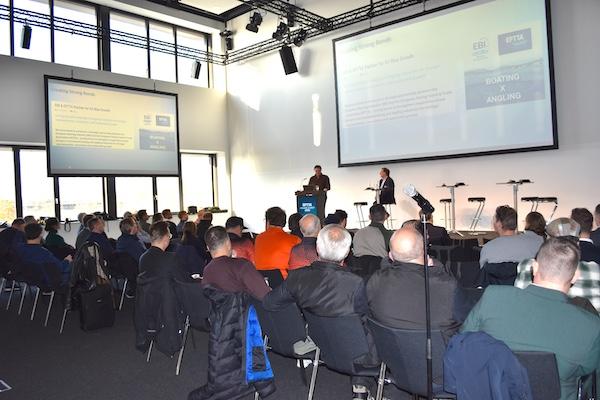
Leading industry figures, experts in their field and the tackle trade in general combined to ensure the 2025 EFTTA Angling Summit was a huge success once more.
Following a fantastic inaugural event last year, the second summit – held at hub27 in Berlin and organised by the European Fishing Tackle Trade Association (EFTTA) – brought together a strong line up of speakers and an equally strong audience from the fishing tackle industry.
EFTTA president Gerard Bakkenes welcomed visitors, saying: “Why do we need to shape the future of the industry? There are new rules and regulations, questions around PFAs and lead and we need to be at the forefront of these discussions; we have to secure recreational angling’s right to exist.
“It is important for environmental responsibility, or mental health and we ned to work out how we can attract more anglers to grow our industry. Only united, can we win.”
Making a difference
Peter Lyngby from Dansk Lystfiskeri (the Danish tackle trade association) explained how the organisation had managed to grow from a small industry voice battling declining fish stocks, falling angler numbers and threats to the environment into a key part of the changing landscape, with rising fishing licence numbers, a national strategy for the sport and a major influence on government fisheries policy.
A joint panel discussion featuring Mark Owen of the European Anglers’ Alliance, representatives from key national angling bodies and EFTTA itself looked at the latest issues surrounding several key fishing nations and how they were being tackled.
Well-known scientist Professor Robert Arlinghaus discussed the importance of harvest slots to protect big fish stocks, saying: “If big fish and old fish didn’t matter, nature wouldn’t support them, it would erase them. Evolution selects for multiple spawning events.”
Joana Patricio, DG Mare from the European Commission, explained how the new EU Fishers app would work when it gores live from January 10, 2026. At that point, recreational sea anglers are expected to begin using it to collect data which will help the EU better understand fish stocks to inform its future policies.
Els Torreele, a senior scientist at ILVO Marine, detailed the importance of gathering recreational fishing data that was trustworthy while one of the most important topics of the day was presented by Deloitte legal expert Markus Uhl, who spoke about EU customs reforms and safeguards around companies like Temu and other cheap Chinese importers.
Environmental concerns
As ever, environmental concerns were never far from the minds of the delegates. EFTTA lobbyist Jan Kappel talked through the latest timelines on lead restrictions, while Cyrille Viellard, president and CEO of Rapala VMC, detailed his company’s work on sustainability reporting.
He said: “Make sure you know your products well, where they are coming from, the production chain and even where they are going.”
Viv Shears and Steve Tapp from the Anglers’ National Line Recycling Scheme explained how tackle shops and fisheries across the UK had helped collect millions of metres of monofilament and fly lines plus countless tonnes of discarded plastic, which gets sorted and then recycled into everything from rod stands to sunglasses.
Then Finland’s Markku Vierelä outlined a strategy for sustainable growth and wellbeing.
UK Angling Trades Association chairman Andrew Race gave a detail presentation on how the industry could play a key role in angler retention and growth.
Andrew warned other associations: “The higher the churn (the rate of turnover of anglers), the better our recruitment processes need to be to maintain angler numbers.
“Are the methods of fishing we are showcasing, the right ones to get more people into the sport and to keep them? We need to decide what sort of angler we want for the future and provide the right products in the correct packaging to do that.”
Open discussions
There were also crucial panel discussions led by the EFTTA board on the surge of low-value imports from China which are flooding the European market and hitting tackle manufacturers as well as the importance of trade policies and getting angling represented at the highest level.
In the evening, attendees enjoyed a networking dinner, with the chance to continue their earlier conversations.
Concluding the event, EFTTA vice-president and summit moderator Ross Honey said: “Fishing is important – we all lead busy lives and it’s the only time I switch off; it’s the thrill and excitement.
“When you see people who have travelled a long way and come with such knowledge and passion that they shared today with us, looking to help shape the future of angling, that gives me a big thrill.
“I think angling – if we all work together – is in a good place. I think we are going to do some great things together – and together we are certainly stronger.
“Thank to everyone for sharing your thoughts – good, bad and indifferent; that’s how we learn and how we can improve things.”
- Next year’s EFTTA Angling Summit is already scheduled for Thursday, November 26th, 2026.
- Log in or register to post comments