Trade body highlights alternative fishery management plan
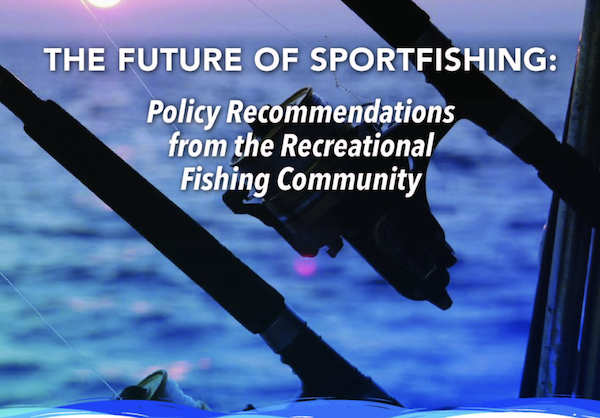
US industry body the American Sportfishing Association is celebrating after a judge upheld the legality of a ruling over recreational fisheries for summer flounder, scup and black sea bass.
Judge Beryl Howell of the United States District Court for the District of Columbia has upheld the legality of the Harvest Control Rule (HCR) under Framework 17. ASA was accepted as an intervenor in the Framework 17 lawsuit.
The ASDA explained the ruling affirms that the HCR and the Percent Change Approach, implemented in the Mid-Atlantic and New England regions, comply with the Magnuson-Stevens Fishery Conservation and Management Act (MSA).
The overall goal of the approach is to provide more stability for the recreational sector by continually adjusting management measures to achieve the Recreational Harvest Limit, while minimising potential overreaction (overcorrection) to annual variability in the harvest estimates.
Mike Waine, ASA’s Atlantic Fisheries Policy director, said: “This ruling reinforces the progress made in developing alternative recreational fisheries management that still adheres to the conservation ethic of the MSA and highlights the significance of innovative strategies like Framework 17.
“Such measures are essential for addressing inherent imprecision in recreational fisheries data, providing predictability for anglers, and supporting a robust recreational fishing sector.”
The court concluded that Framework 17 not only fulfils the Annual Catch Limit (ACL) requirements of the MSA but also aligns more closely with National Standard 1.
This standard establishes two key targets: (1) preventing overfishing and (2) consistently achieving optimum yield (OY). While the ACL acts as a guideline for preventing overfishing, National Standard 1 emphasizes a wider approach, indicating that the ACL alone should not be the only measure used to assess the effectiveness of recreational management strategies.
The court’s holding recognises that the National Marine Fisheries Service can adopt management approaches that better address the inherent variability and uncertainty present in recreational fisheries compared to commercial fisheries and that are consistent with the Modernizing Recreational Fisheries Management Act of 2018.
This comprehensive approach fosters a more effective and stable regulatory environment, benefiting both fishery resources and the angling community. Framework 17 was developed collaboratively over multiple years with stakeholders, the Mid-Atlantic Fishery Management Council, the Atlantic States Marine Fisheries Commission and NOAA Fisheries and is part of a broader recreational reform initiative in the region.
- Log in or register to post comments